
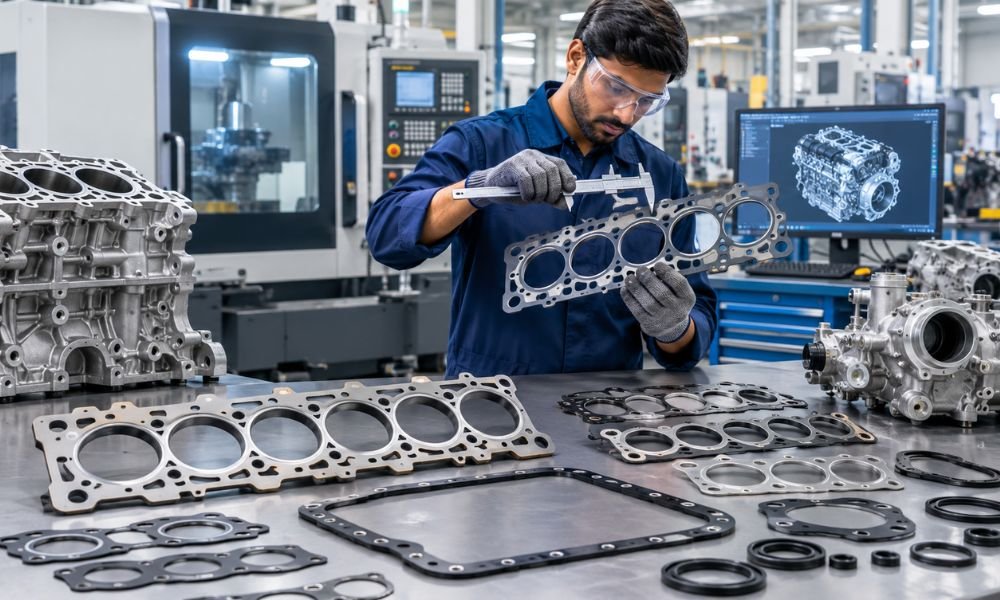
Engine gaskets are important components that help maintain proper sealing between different parts of an engine. They prevent the leakage of engine oil, coolant, combustion gases, and other fluids while supporting the smooth operation of engine systems. From passenger cars and commercial vehicles to agricultural machinery and industrial engines, different applications require gaskets with specific designs, materials, and performance characteristics.
However, not every engine operates under the same conditions. Engine size, operating temperature, pressure levels, vibration, fuel type, and mechanical design can vary significantly. Because of these differences, manufacturers must carefully consider individual engine requirements before producing suitable gasket solutions.
Experienced engine gasket manufacturers in India focus on material selection, product dimensions, manufacturing techniques, and quality checks to meet different application needs. Understanding how manufacturers handle these variations can help businesses choose suitable gasket products for their engines.
1. Understanding Different Engine Types and Applications
The first step in manufacturing an engine gasket is understanding where and how it will be used. Different engines have different operating requirements, which influence gasket design and material selection.
For example, passenger vehicle engines generally require compact and accurately designed gaskets that support consistent sealing during regular operation. Heavy-duty diesel engines may require components capable of handling higher combustion pressures, continuous workloads, and demanding operating conditions.
Similarly, agricultural machinery, generators, construction equipment, and industrial engines may require specialised gasket solutions depending on their working environment.
Manufacturers consider these differences before deciding on product specifications. Understanding the engine application helps them develop gaskets that match the equipment’s requirements rather than relying on a standard design for every purpose.
2. Selecting the Right Material for Each Engine
Material selection is one of the most important aspects of engine gasket manufacturing. The selected material must provide effective sealing while handling the temperature, pressure, and fluids associated with the engine.
Some commonly used materials include:
- Multi-Layer Steel (MLS): Used in many modern engine applications where high sealing performance and resistance to combustion pressure are required.
- Graphite: Offers flexibility and thermal resistance for suitable sealing applications.
- Non-Asbestos Materials: Used in different gasket applications as alternatives to asbestos-containing materials.
- Rubber and Elastomers: Provide flexibility and sealing properties for engine covers and fluid-related sealing points.
- Composite Materials: Combine different material properties to meet specific performance requirements.
The choice depends on the gasket’s position and working conditions. For instance, a cylinder head gasket has different requirements from an oil sump gasket. Manufacturers evaluate these factors to select a material that offers suitable durability and sealing performance.
3. Designing Gaskets According to Engine Specifications
Accurate design is essential for ensuring that an engine gasket fits properly and performs its intended function. Even a small dimensional difference can create fitting difficulties or affect the sealing arrangement.
Manufacturers consider several specifications during the design process, including engine model, bolt-hole positions, cylinder openings, oil passages, coolant channels, thickness, and overall dimensions.
For customised requirements, customers may provide technical drawings, existing gasket samples, or detailed measurements. Manufacturers use this information to develop products that match the required specifications.
Proper design also helps ensure that important engine passages remain correctly aligned after installation. This is particularly important for cylinder head gaskets, which must seal combustion chambers while separating oil and coolant passages.
4. Manufacturing Different Types of Engine Gaskets
Different sections of an engine require different types of gaskets. Manufacturers consider the purpose of each component before selecting its construction and production method.
Some commonly manufactured engine gaskets include:
- Cylinder Head Gaskets: These are fitted between the engine block and cylinder head. They help seal combustion pressure and prevent oil and coolant from mixing.
- Oil Sump Gaskets: These provide sealing between the oil pan and engine block to prevent engine oil leakage.
- Valve Cover Gaskets: These help prevent oil leakage from the upper section of the engine.
- Intake Manifold Gaskets: These create a seal between the intake manifold and engine components, helping maintain the required air or air-fuel flow.
- Exhaust Manifold Gaskets: These are designed to handle the heat and pressure associated with exhaust gases.
Each gasket has a different function, so its dimensions, material, and construction must be suitable for the intended application.
5. Considering Temperature and Pressure Requirements
Engines generate heat and pressure during operation. These conditions can affect gasket performance, especially when components are exposed to repeated heating and cooling cycles.
A cylinder head gasket, for example, must withstand demanding combustion conditions while maintaining effective seals around oil and coolant passages. Other engine gaskets may operate under comparatively lower pressure but still require resistance to oil, heat, and vibration.
Manufacturers consider the expected operating temperature and pressure before selecting materials and gasket designs. They also evaluate the sealing requirements of the mating surfaces and the compression characteristics of the selected material.
Choosing suitable specifications helps reduce the possibility of leakage, material deterioration, and premature gasket failure.
6. Providing Customised Solutions for Specialised Engines
Standard gasket designs may not always be suitable for specialised or older engine models. Some industrial machines, commercial vehicles, and agricultural equipment require gaskets with unique shapes, dimensions, or material specifications.
To handle these requirements, manufacturers may offer customised gasket production based on customer drawings, samples, or technical specifications.
Customisation can involve changes in thickness, material grade, cutting dimensions, hole positions, and overall gasket profiles. This approach is useful when replacement components are difficult to source or when an application requires a specific design.
A manufacturer with suitable technical capabilities can help businesses obtain gasket solutions that match their equipment requirements more accurately.
7. Maintaining Quality Through Manufacturing Checks
Consistent quality is important because an engine gasket must maintain its sealing performance under actual operating conditions. Manufacturing defects, incorrect dimensions, or unsuitable material properties can affect the final product.
To minimise these issues, manufacturers use quality checks at different production stages. Depending on the gasket type, these may include raw material inspection, thickness measurement, dimensional verification, hardness testing, and visual inspection.
Some applications may also require additional performance or fitment testing.
Manufacturers must pay particular attention to product consistency when handling bulk orders. Maintaining uniform specifications across production batches helps businesses receive components that meet their required standards.
8. Supporting Different Industries and Engine Requirements
Engine gasket manufacturers serve customers across several industries. Each industry uses different types of engines and equipment, creating different sealing requirements.
For example, automotive manufacturers and replacement-parts suppliers may require gaskets for petrol and diesel vehicle engines. Agricultural equipment businesses may need products for tractors and other machinery that operate under continuous workloads.
Industrial facilities may require gasket components for generators, compressors, and specialised machinery. Commercial vehicle applications may also demand products designed for regular operation under demanding conditions.
By understanding these industry-specific requirements, manufacturers can develop and supply suitable gasket products for different applications.
9. Why Choosing an Experienced Engine Gasket Manufacturer Matters
Selecting the right manufacturer is important for obtaining products that match your engine specifications. A dependable manufacturer should understand material properties, manufacturing processes, dimensional accuracy, and application requirements.
Before choosing a supplier, consider its manufacturing experience, product range, customisation capabilities, quality control practices, and ability to handle bulk orders.
It is also useful to discuss your technical requirements before placing an order. Sharing accurate engine details can help the manufacturer identify suitable materials and product specifications.
Celofin Gasket is a name to consider when exploring gasket manufacturing solutions. Businesses should evaluate their specific engine requirements and discuss the necessary product specifications to identify suitable gasket options.
Conclusion
Different engines require different gasket designs, materials, and performance characteristics. Engine gasket manufacturers in India handle these variations by understanding application requirements, selecting suitable materials, developing accurate designs, and maintaining quality throughout the manufacturing process.
From cylinder head and oil sump gaskets to customised sealing components, every product must be designed according to its intended function and operating environment. Businesses that consider these factors when selecting a manufacturer can make better sourcing decisions and support the reliable operation of their engines.
Choosing a manufacturer with the right technical knowledge and production capabilities can also help reduce fitting issues, minimise leakage risks, and improve the overall performance of engine components.
Don’t miss: What to Consider Before Choosing a Rubber Gasket Manufacturer in India