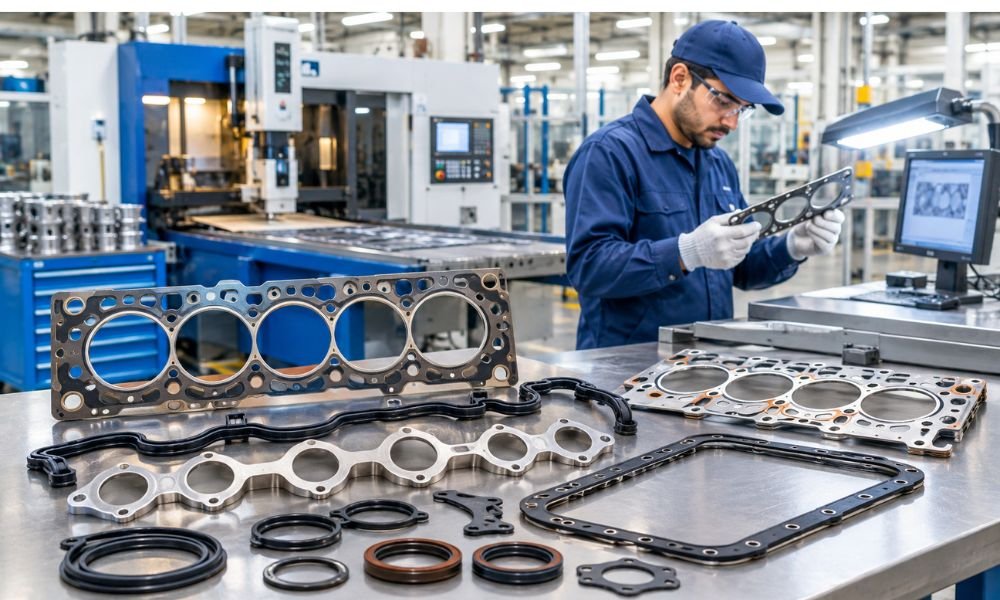
Engine gaskets are essential components in automobiles, commercial vehicles, agricultural machinery, and industrial equipment. They create a seal between different engine parts, helping prevent the leakage of oil, coolant, and combustion gases. Properly manufactured gaskets also support engine efficiency and help maintain reliable equipment performance.
For businesses purchasing engine gaskets, choosing the right manufacturer is an important decision. Product quality, material selection, dimensional accuracy, manufacturing capabilities, and delivery timelines can all influence the overall purchasing experience. A gasket that does not match the engine’s specifications may cause leakage, fitting problems, and additional maintenance requirements.
India has several manufacturers offering different types of engine sealing products. However, buyers should understand a few important factors before selecting engine gasket manufacturers in India. Whether you are an automotive parts distributor, equipment manufacturer, mechanic, or industrial buyer, the following points can help you make an informed decision.
1. Understand Your Engine Gasket Requirements
Before contacting a manufacturer, identify the type of gasket you need and where it will be installed. Different engine components require different sealing solutions, so a standard gasket may not be suitable for every application.
For example, cylinder head gaskets are used between the engine block and cylinder head, while oil sump gaskets help prevent oil leakage from the oil pan. Valve cover gaskets, intake manifold gaskets, and exhaust manifold gaskets also perform specific functions.
Buyers should understand the engine model, gasket dimensions, material requirements, and operating conditions before requesting a quotation. Providing accurate information makes it easier for manufacturers to recommend suitable products.
2. Check the Quality of Raw Materials
The material used in an engine gasket has a direct impact on its sealing performance, durability, and resistance to operating conditions. Engines generate heat and pressure, and their components may come into contact with oil, coolant, and other fluids.
Some commonly used gasket materials include:
- Multi-Layer Steel (MLS): Commonly used in modern engine applications requiring reliable sealing under high combustion pressure.
- Graphite: Offers flexibility and thermal resistance for suitable engine sealing applications.
- Non-Asbestos Materials: Used in different gasket applications where suitable alternatives to asbestos-containing materials are required.
- Rubber Materials: Provide flexibility and are commonly used in oil-related sealing applications.
- Composite Materials: Combine different material properties to meet specific application requirements.
Before purchasing, ask the manufacturer about the available materials and their suitability for your engine. The right material selection can help reduce premature wear and improve gasket performance.
3. Look for Manufacturing Experience
A manufacturer’s experience can provide useful information about its understanding of engine gasket production. Companies with relevant industry experience are generally more familiar with different gasket designs, material properties, and application requirements.
An experienced manufacturer may also be better equipped to handle customised specifications and specialised engine requirements.
Buyers should explore the company’s manufacturing background, product range, and experience in serving automotive or industrial customers. You can also enquire about its production processes and the types of gasket applications it handles.
Rather than choosing a supplier based only on its product catalogue, consider whether its technical capabilities match your purchasing requirements.
4. Check Product Dimensions and Accuracy
Dimensional accuracy is essential for proper gasket installation. Even small differences in thickness, shape, or hole positioning can affect the fitting and sealing arrangement.
For this reason, buyers should check whether the manufacturer follows appropriate measurement and inspection procedures during production.
Important specifications may include:
- Overall gasket length and width.
- Material thickness.
- Bolt-hole positions.
- Cylinder and passage openings.
- Gasket profile and shape.
- Required compression characteristics.
If you are ordering a customised gasket, provide a technical drawing, sample, or accurate measurements wherever possible. This helps reduce errors and ensures that the manufactured product matches the intended application.
5. Explore Custom Engine Gasket Options
Not every engine uses a standard gasket design. Older machinery, specialised equipment, and certain commercial engines may require components with specific shapes, dimensions, or material properties.
In such situations, custom manufacturing becomes important.
Many buyers prefer manufacturers that can produce gaskets according to technical drawings, existing samples, or application-specific specifications. Customisation may involve different thicknesses, profiles, cutting requirements, and material selections.
Before placing an order, confirm whether the manufacturer can handle your design requirements and produce the required quantity. This is particularly useful for businesses sourcing replacement gaskets for equipment with limited standard spare-part availability.
6. Understand the Manufacturer’s Quality Control Process
Quality control is another important factor buyers should evaluate before selecting an engine gasket manufacturer. A gasket may look suitable externally, but its material properties and dimensional accuracy also influence its actual performance.
Manufacturers may use different inspection methods depending on the product type and application. These can include raw material checks, thickness measurements, dimensional verification, hardness testing, and visual inspection.
Buyers can ask about the manufacturer’s quality management procedures and relevant certifications. For example, ISO 9001 certification indicates an established quality management system.
It is also worth discussing whether product specifications remain consistent across different manufacturing batches, especially when purchasing large quantities.
7. Compare Pricing and Minimum Order Quantities
Price is an important consideration for buyers, particularly distributors, wholesalers, and businesses purchasing engine gaskets regularly.
However, the cheapest product may not always provide the best overall value. Manufacturing quality, material selection, product dimensions, and order quantity can all influence the final price.
When comparing quotations, check whether the manufacturers are offering products with the same specifications. Also enquire about minimum order quantities, bulk pricing, packaging costs, and delivery charges.
A detailed comparison helps you understand what you are paying for and reduces the chances of selecting an unsuitable product simply because it has a lower price.
8. Check Production Capacity and Delivery Commitments
For businesses that depend on regular gasket supplies, production capacity and delivery schedules are important purchasing considerations.
A delay in receiving engine gaskets can affect repair work, inventory planning, and manufacturing operations. Therefore, buyers should understand whether a manufacturer can fulfil the required quantity within the expected timeframe.
If you need bulk supplies, discuss production planning and order management in advance. For customised products, confirm the estimated manufacturing time before finalising the purchase.
A manufacturer with organised production processes can make regular sourcing more convenient and help businesses manage their requirements efficiently.
9. Evaluate Customer Support and Technical Assistance
Good communication can make the entire purchasing process easier. Buyers may need assistance with material selection, gasket specifications, product availability, and customised manufacturing.
A reliable manufacturer should be able to understand these requirements and provide clear product information.
For example, if you are unsure whether a particular gasket material is suitable for your engine, technical guidance can help you understand the available options.
Also, consider how the manufacturer handles enquiries, shares quotations, communicates delivery updates, and responds to product-related concerns. Professional customer support is especially valuable when establishing a long-term supplier relationship.
10. Research the Manufacturer’s Reputation
Before finalising a purchase, take some time to understand the manufacturer’s reputation. Customer feedback, business references, product information, and previous industry experience can help you evaluate its reliability.
You can also request product samples when appropriate, particularly if you are planning a bulk purchase or working with a new supplier.
Check whether the company provides clear product specifications and communicates honestly about its manufacturing capabilities. A transparent approach makes it easier to understand what to expect from the supplier.
For regular buyers, selecting a manufacturer that maintains consistent quality and dependable communication can support a more reliable supply arrangement.
Why Choosing the Right Engine Gasket Manufacturer Matters
Engine gaskets may be small components, but their role in engine performance is important. Incorrect dimensions, unsuitable materials, or inconsistent manufacturing quality can lead to leakage and maintenance problems.
Working with the right manufacturer helps buyers source products according to their engine specifications. It can also make customised orders, bulk purchasing, and regular product requirements easier to manage.
Celofin Gasket is a name buyers can consider when exploring gasket manufacturing solutions for different industrial requirements. Discussing your application, required dimensions, and material specifications can help determine the suitability of available gasket products.
Conclusion
Choosing an engine gasket manufacturer requires careful evaluation of several factors, including raw material quality, manufacturing experience, dimensional accuracy, customisation facilities, pricing, and delivery capabilities.
Buyers should always understand their engine requirements before placing an order and compare manufacturers based on product specifications rather than price alone. Asking the right questions and checking quality procedures can help reduce purchasing mistakes and improve long-term product reliability.
Whether you need standard engine gaskets or customised sealing components, selecting a suitable manufacturer can make a difference in maintaining proper engine sealing and supporting smooth equipment operation.
Don’t miss: What Buyers Should Know About Engine Gasket Manufacturers in India