
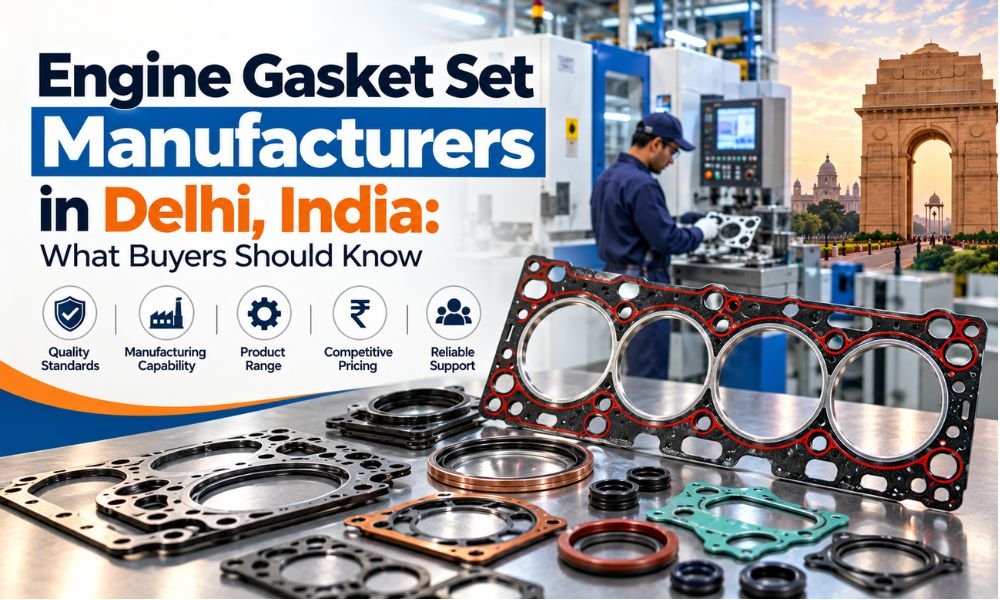
Engine gasket sets are important for maintaining the proper functioning of vehicle engines and industrial machinery. These sets contain multiple gaskets designed to seal different engine components, helping prevent oil, coolant, and combustion gas leaks. For mechanics, automotive spare parts dealers, workshops, and equipment businesses, selecting the right gasket set can make repairs easier and help maintain engine reliability.
However, buying an engine gasket set involves more than checking its price or appearance. Buyers need to consider engine compatibility, material quality, component accuracy, manufacturing standards, and supplier reliability.
Delhi has a wide market for automotive components and industrial supplies, giving buyers different options to explore. Understanding what to check before placing an order can help you make a practical purchasing decision.
1. Understand What an Engine Gasket Set Includes
An engine gasket set generally contains several gaskets required for particular engine repairs or maintenance jobs. The exact contents depend on the engine model and the type of set being purchased.
Some sets are designed for specific repair tasks, while more comprehensive sets may include gaskets for multiple engine sections. Depending on the product, the components may cover areas such as the cylinder head, valve cover, oil pan, intake manifold, and exhaust manifold.
Buyers should never assume that every set contains the same components. Before ordering, ask for a complete list of included parts and compare it with your repair requirements.
For workshops and spare parts distributors, this simple check can prevent missing components from delaying a repair. It also helps ensure that you are comparing similar products when requesting quotations from different suppliers.
2. Check Engine Compatibility Before Ordering
Compatibility is one of the most important factors when purchasing an engine gasket set. Even engines from the same vehicle manufacturer may have different designs, dimensions, and sealing requirements.
A gasket set intended for one engine variant may not fit another correctly. Differences in cylinder bore dimensions, oil passages, coolant openings, and bolt arrangements can affect whether the components are suitable.
Before contacting a supplier, collect the necessary details, including the vehicle or machinery make, engine model, manufacturing year, and part number, where available. For commercial or industrial engines, the engine identification details can be particularly helpful.
If you are unsure about compatibility, share the original part reference or technical specifications with the supplier. Confirm the details before making payment or approving a bulk order.
Taking these precautions can help avoid incorrect purchases, return complications, and wasted installation time.
3. Evaluate the Quality of Materials
The materials used in an engine gasket set influence its ability to withstand operating temperatures, pressure, vibration, and contact with engine fluids. Different gasket positions require different performance characteristics, so material selection should match the intended application.
For example, multilayer steel is commonly used for many modern cylinder head gasket applications, while composite materials may be suitable for other engine designs. Rubber-based materials are also used for particular seals and gaskets where flexibility is required.
When comparing products, ask the supplier about the materials used in the components and whether they meet the engine manufacturer’s specifications.
Do not judge quality by colour, thickness, or appearance alone. Two gaskets may look similar but have different material properties and performance characteristics.
Choosing suitable materials can help reduce premature wear and support reliable sealing throughout the expected service period.
4. Look for Accurate Manufacturing and Proper Fit
An engine gasket must fit the intended component correctly to create an effective seal. Poorly positioned openings, incorrect dimensions, uneven thickness, or damaged edges can interfere with installation and performance.
This is why manufacturing accuracy matters when choosing a supplier. Buyers should check whether the manufacturer follows suitable production and inspection procedures for the gasket sets it supplies.
Ask about dimensional checks, material inspection, and the methods used to maintain consistency across production batches. For large orders, it may be useful to request a sample or inspect a representative set before confirming the complete quantity.
Workshops should also compare replacement components with the engine’s approved specifications rather than relying entirely on visual similarity.
A properly manufactured gasket set helps make installation more straightforward and reduces the risk of problems caused by incorrect fitting.
5. Assess the Supplier’s Manufacturing Capabilities
Not every supplier has the same production capabilities. Some focus on standard replacement gasket sets, while others may handle specialised requirements or components made according to technical drawings.
When evaluating Engine Gasket Set Manufacturers in Delhi, India, buyers should ask about the product range, manufacturing processes, and ability to meet their required specifications.
If you need gaskets for less common engines or industrial machinery, find out whether the supplier can identify suitable components using part numbers, samples, or technical drawings.
It is also useful to understand how the manufacturer handles changes in specifications and whether it can accommodate different order quantities.
For businesses purchasing regularly, consistent production and clear communication are particularly valuable. These factors can help maintain product availability and simplify future orders.
6. Compare Prices Without Ignoring Quality
Price is an important consideration for repair workshops, retailers, distributors, and bulk buyers. However, selecting an engine gasket set based only on the lowest quotation can create problems if the product does not meet the required specifications.
A poorly matched or inconsistent set may lead to fitting difficulties, repeat repairs, and additional labour costs. These expenses can outweigh the original savings.
When comparing quotations, consider the number of components included, material specifications, product compatibility, packaging, order quantity, and delivery charges.
Make sure that each supplier is quoting for the same type of gasket set. A partial set should not be compared directly with a more comprehensive set without accounting for the difference in contents.
For regular purchases, ask about bulk pricing and repeat-order terms. A transparent quotation makes it easier to understand the overall value of the product.
7. Check Quality Assurance and Product Documentation
Product documentation can help buyers verify specifications and maintain proper purchasing records. Depending on the application, useful documents may include material details, inspection reports, technical datasheets, and relevant quality certificates.
Ask the supplier what information is available for the gasket sets you intend to purchase. If you supply components to automotive businesses with specific quality requirements, confirm these requirements before placing an order.
You should also ask how defective or incorrectly supplied components are handled. A clear process for reporting issues and requesting replacements can save time when problems occur.
Remember that certification requirements vary according to the product and industry. Request documentation that is relevant to your application rather than assuming that every gasket set requires the same tests or certificates.
8. Consider Delivery Time and Stock Availability
For automotive workshops, a missing gasket set can delay an engine repair and affect the entire work schedule. Spare parts dealers also need dependable availability to serve their customers.
Before ordering, confirm whether the required set is in stock or needs to be manufactured. Ask about expected delivery times, minimum order quantities, and the availability of different engine models.
If you purchase in bulk, discuss how the supplier manages repeat orders and whether it can support your expected demand.
Buyers in Delhi may also want to clarify delivery arrangements, transportation costs, packaging, and the process for handling damaged shipments.
Reliable communication about availability and dispatch schedules makes inventory planning easier and reduces uncertainty during busy periods.
9. Choose a Supplier That Supports Long-Term Needs
A good supplier relationship should provide value beyond a single transaction. Businesses that regularly purchase engine gasket sets benefit from consistent specifications, clear product information, and dependable order fulfilment.
Before choosing a long-term supplier, consider its ability to handle your usual quantities, respond to technical questions, and maintain product consistency across repeat purchases.
It is also worth reviewing customer feedback and business references where available. These can provide useful insight into communication and service, although they should be considered alongside product quality and technical suitability.
For businesses evaluating suppliers, Celofin Gasket can be included in the selection process. Review the available product range and confirm that the required specifications, quality expectations, and delivery arrangements match your needs.
Conclusion
Buying an engine gasket set requires careful attention to compatibility, material quality, manufacturing accuracy, product contents, and supplier reliability. A low price alone does not guarantee that a set will suit your engine or provide dependable sealing performance.
Before placing an order, identify the correct engine model, verify the included components, compare quotations against the same specifications, and ask for relevant documentation when needed.
Whether you are purchasing for an automotive workshop, spare parts business, or industrial application, a structured evaluation can help reduce ordering mistakes and unnecessary expenses. Choosing a supplier that understands your requirements and communicates clearly can make the purchasing process more reliable and manageable over the long term.
Don’t miss: How to Choose the Right Engine Gasket Manufacturer in India