Gaskets may be small components, but they have an important role in industrial equipment. They are used to create a seal between two surfaces and help prevent the leakage of liquids, gases, steam, and other substances. Since gaskets work under different operating conditions, the quality of their material can have a direct effect on sealing performance and equipment reliability.
When businesses search for a gasket supplier, they often compare prices, product availability, delivery time, and product range. These factors are important, but material quality should not be overlooked. Understanding how a gasket is made and which material is suitable for a particular application can help businesses make a more informed purchasing decision.
Why Gasket Material Is So Important
Gaskets are exposed to different working conditions depending on where they are used. Some may have to handle high temperatures, while others come into contact with chemicals, oils, water, steam, or high-pressure fluids. Continuous vibration and mechanical stress can also affect gasket performance.
The material needs to withstand these conditions without losing its sealing properties too quickly. If an unsuitable material is selected, the gasket may become hard, soft, brittle, compressed, or damaged over time.
For this reason, businesses should not select a gasket only by looking at its size or price. Material suitability is equally important. A knowledgeable supplier can help identify the material that matches the operating environment and application requirements.
Different Materials Suit Different Applications
There is no single gasket material that works perfectly for every industrial requirement. Different materials offer different levels of flexibility, temperature resistance, chemical resistance, compressibility, and durability.
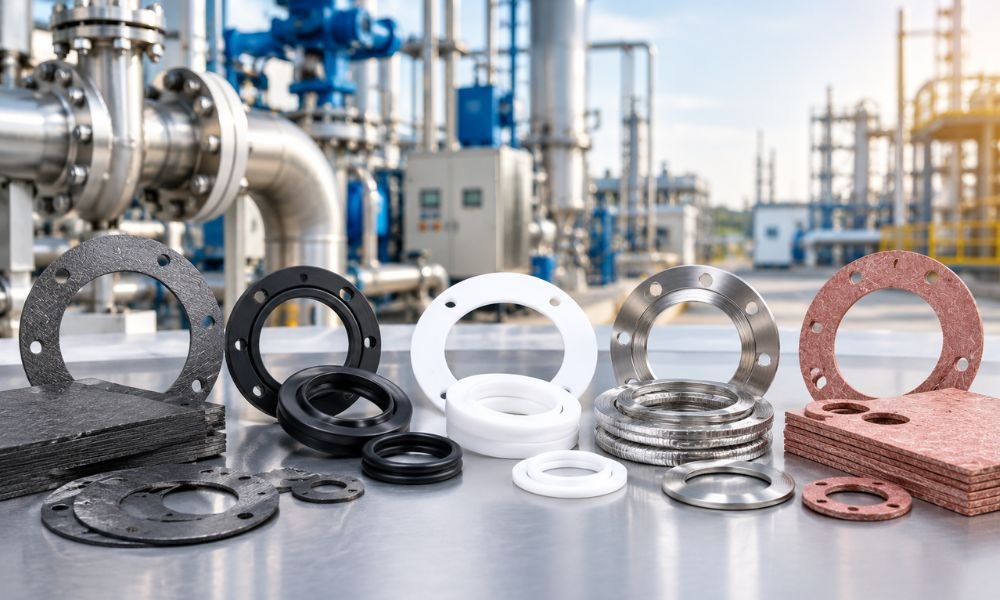
Rubber-based gasket materials, for example, may be suitable for applications where flexibility and effective sealing are important. PTFE is commonly considered where chemical resistance is required, while graphite can be useful in applications involving higher temperatures. Metal gaskets may be selected for demanding pressure and temperature conditions.
The choice depends on the actual application. Factors such as operating temperature, pressure, fluid or gas being handled, flange condition, and equipment design should be considered before making a selection.
Consistency Is a Sign of Reliable Quality
Material quality is not only about choosing the correct material. Consistency also matters. Gaskets supplied under the same specifications should provide reasonably consistent performance from one order to another.
Variations in thickness, density, flexibility, composition, or manufacturing quality can affect how effectively a gasket seals. This can become particularly problematic for businesses that use gaskets regularly across production lines or maintenance operations.
A dependable supplier should have suitable quality-control practices in place to maintain consistency. Customers can also ask about product specifications and material details before placing large or repeat orders.
Poor Material Quality Can Increase Maintenance Costs
Choosing a low-cost gasket may appear economical at first, but poor material quality can create additional expenses later. A gasket that deteriorates quickly may need to be replaced more frequently, increasing both material and labour costs.
Repeated sealing failures can also lead to equipment downtime. In industrial environments, even a relatively small leakage problem may interrupt operations or require additional inspection and maintenance.
Good-quality material does not necessarily mean choosing the most expensive gasket available. Instead, it means selecting a product that is appropriate for the conditions in which it will be used. This approach can help businesses avoid unnecessary replacements and improve the overall value of their purchase.
What Should Businesses Check Before Buying?
Before selecting a gasket supplier, businesses should ask a few practical questions about the products they are considering.
First, check whether the supplier can clearly explain the material used in the gasket and its suitable applications. A reliable supplier should be able to discuss basic material properties instead of simply providing a product catalogue.
Next, confirm whether the gasket can be manufactured or supplied according to the required dimensions and specifications. Correct size and thickness are essential because even a high-quality material may not provide an effective seal if the gasket does not fit properly.
It is also worth checking whether the supplier can handle different industrial requirements. A wider understanding of materials and applications can be useful when standard gasket options are not suitable for a particular piece of equipment.
Price Should Not Be the Only Consideration
Price naturally influences purchasing decisions, but it should not be the only deciding factor. A cheaper gasket may require more frequent replacement, while a properly selected product may provide more dependable performance over a longer period.
When comparing suppliers, businesses should consider the complete value of the product. This includes material quality, manufacturing accuracy, consistency, application suitability, availability, and expected service life.
Looking at these factors together makes it easier to determine whether a supplier can provide a practical solution rather than simply a low-cost product.
Material Knowledge Helps in Supplier Selection
A supplier’s knowledge of gasket materials can tell businesses a lot about the quality of service they can expect. A supplier that understands the differences between materials can provide more useful guidance based on temperature, pressure, chemical exposure, and other operating conditions.
For businesses evaluating options for industrial sealing requirements, Celofin Gaskets provides gasket solutions for different applications. However, the most important consideration should always be whether the selected gasket material is appropriate for the specific equipment and working environment.
Final Thoughts
Material quality is one of the most important factors to consider when identifying the Best Gasket Supplier in India. A reliable gasket is not simply about its shape or appearance. Its performance depends heavily on the material, manufacturing quality, and suitability for the application.
Businesses should therefore look beyond price when comparing suppliers. Asking about material properties, checking specifications, considering operating conditions, and looking for consistent product quality can help reduce sealing problems and unnecessary replacements.
The right supplier should be able to provide suitable products while also understanding the requirements behind them. When material selection and product quality receive proper attention, businesses can make more confident decisions and support the reliable operation of their equipment.
Don’t miss: Top 10 Gasket Manufacturers in India for Industrial Sealing Needs