Gaskets are essential components in many industrial systems. They are used between two connected surfaces to help prevent the leakage of liquids or gases and maintain a proper seal during operation. From manufacturing equipment and pipelines to pumps, valves, engines, and processing systems, the right gasket can contribute to reliable equipment performance.
For businesses, finding the right sealing product is not always as simple as choosing a gasket by size. Different applications involve different temperatures, pressure levels, materials, fluids, and equipment designs. This is why many companies prefer to work with a Gasket Dealer in India when sourcing products for their maintenance and industrial requirements.
Access to Different Gasket Options
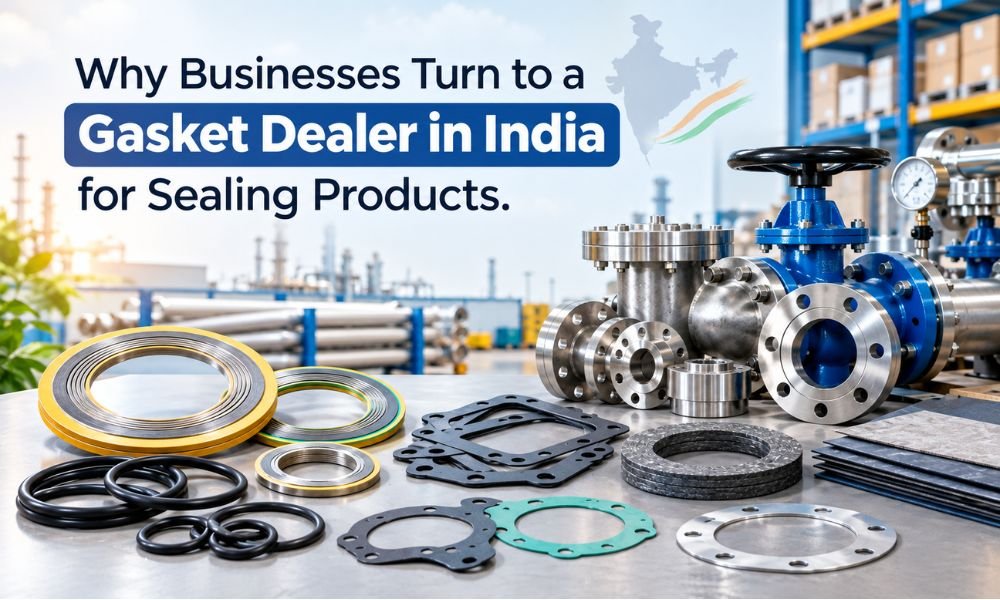
One of the main advantages of working with a dealer is having access to different types of gaskets. Industrial applications can require products such as spiral wound gaskets, rubber gaskets, graphite gaskets, PTFE gaskets, metallic gaskets, and other sealing components.
Each type has its own characteristics and is suitable for particular operating conditions. A business that manages different types of equipment may therefore benefit from having a supplier that can provide more than one gasket option.
Products for Different Industrial Applications
Gaskets are used across a wide range of industries. Manufacturing plants, power facilities, chemical processing units, automotive companies, oil and gas operations, pharmaceutical facilities, and engineering businesses may all have different sealing requirements.
For example, equipment handling chemicals may need a gasket material that offers suitable chemical resistance, while high-temperature machinery may require a material designed to perform under elevated temperatures.
Understanding the application before purchasing helps businesses avoid selecting a product simply because it looks suitable or matches the required dimensions.
Material Selection Matters
The material of a gasket can have a significant effect on its performance. Common gasket materials include rubber, graphite, PTFE, compressed fibre, and various metals.
The appropriate material depends on several factors, including:
- Operating temperature
- Pressure conditions
- Type of fluid or gas
- Chemical exposure
- Equipment design
- Flange configuration
- Expected service conditions
For this reason, businesses should provide accurate application details when discussing their requirements with a supplier.
Easier Sourcing for Maintenance Requirements
Gaskets are frequently replaced during maintenance activities. Once a gasket has been removed from equipment, installing a suitable replacement is often necessary before the system can return to operation.
A reliable source can make this process easier, particularly for companies that regularly require replacement components. Having access to commonly used sizes and materials can also help maintenance teams plan routine work more efficiently.
For businesses managing several machines or production systems, establishing a consistent source for sealing products can make recurring purchases more convenient.
Standard and Custom Gasket Requirements
Not every gasket requirement can be fulfilled with a standard product. Some equipment may use unusual dimensions, older specifications, or application-specific designs.
In such cases, businesses may need customized gaskets based on measurements, technical drawings, samples, or equipment specifications. A dealer can help businesses identify whether a standard product is suitable or whether a customized option should be considered.
This can be especially useful when replacement parts are required for specialized machinery.
Support With Product Selection
Choosing the right gasket involves more than knowing its length and width. Thickness, material, pressure rating, temperature range, and application conditions can all influence the choice.
A knowledgeable supplier can help buyers understand available options and identify products that match the information provided. Businesses can also ask about product specifications, expected operating conditions, and installation requirements before placing an order.
This type of support can be useful when purchasing a gasket for the first time or when replacing a product used in a demanding application.
Why Quality Should Not Be Overlooked
Price is naturally an important consideration for businesses, but gasket selection should not be based on cost alone. A product that does not suit the operating conditions may result in leakage, repeated replacement, maintenance work, or equipment downtime.
Quality, material suitability, dimensional accuracy, and manufacturing consistency are therefore important considerations when sourcing gaskets.
Businesses can compare available products based on their actual application requirements instead of simply choosing the least expensive option.
Availability Can Make a Difference
Industrial maintenance often depends on timely access to replacement parts. If a commonly used gasket is unavailable when required, equipment downtime may increase.
Working with an established supplier can make it easier to source regularly used products and plan future requirements. Businesses that use particular gasket sizes or materials frequently can also discuss recurring supply needs with their supplier.
For example, companies sourcing products from manufacturers such as Celofin Gasket can evaluate available options according to their equipment and application requirements.
What Information Should You Provide When Ordering?
Giving the supplier accurate information can make gasket selection easier. Before placing an order, businesses should ideally have details such as:
- Gasket type
- Required dimensions
- Thickness
- Material requirement
- Equipment or application
- Operating temperature
- Operating pressure
- Fluid or gas involved
- Quantity required
- Standard or customized requirement
If the exact gasket specification is not known, providing a sample, drawing, photograph, or equipment details may help the supplier understand the requirement.
How to Get Better Value From Your Gasket Purchases
Businesses can make their gasket procurement more efficient by keeping records of commonly used products. Details such as gasket size, material, equipment name, and previous supplier information can make repeat orders easier.
It is also useful to inspect the old gasket before replacement when possible. Signs of cracking, deformation, compression, chemical damage, or burning may provide useful information about whether the previous material was suitable for the application.
If a gasket repeatedly fails before its expected service period, simply replacing it with the same product may not solve the underlying problem. The operating conditions and gasket selection should be reviewed.
Choosing a Gasket Dealer for Long-Term Requirements
Businesses with regular sealing requirements may benefit from developing a reliable supply relationship rather than searching for a new supplier every time a gasket is needed.
When evaluating a dealer, consider product availability, range of materials, dimensional options, customization support, response time, pricing, and understanding of industrial applications.
The right supplier should be able to provide products that match the technical requirements rather than focusing only on selling a particular gasket type.
Final Thoughts
Gaskets may be relatively simple components, but their role in preventing leakage and maintaining equipment performance makes proper selection important. Different applications require different materials, sizes, designs, and performance characteristics.
Working with a Gasket Dealer in India can make it easier for businesses to source different sealing products, understand available options, manage replacement requirements, and find solutions for standard or customized applications.
Before purchasing, businesses should consider the operating environment, material compatibility, dimensions, temperature, pressure, and equipment requirements. Taking these factors into account can help them select a gasket that is better suited to the application and avoid unnecessary replacement or maintenance issues.
Don’t miss: Top 10 Gasket Manufacturers in India for Industrial Sealing Needs