Rubber gaskets are essential sealing components used across various industries to prevent leakage, maintain pressure, and ensure the proper functioning of machinery and equipment. From automotive and construction to pharmaceuticals, manufacturing, oil and gas, and engineering, rubber gaskets help create secure seals between two surfaces.
However, choosing the right gasket is not simply about finding a product that fits. The material, thickness, design, manufacturing quality, and working conditions all influence how effectively a gasket performs. A poorly selected gasket may lead to leakage, equipment damage, frequent replacements, and unnecessary maintenance expenses.
With several manufacturers offering different types of sealing products, finding a dependable rubber gasket manufacturer in India requires careful consideration. Whether you need standard rubber gaskets or customised solutions for specific industrial applications, understanding the following factors can help you make the right decision.
1. Consider the Manufacturer’s Industry Experience
Industry experience is an important factor when selecting a rubber gasket manufacturer. A company with practical manufacturing experience is more likely to understand different industrial requirements, material properties, and sealing challenges.
Experienced manufacturers generally have better knowledge of production techniques, rubber compounds, gasket designs, and application-specific requirements. They can also help customers identify suitable products based on their machinery and operating conditions.
Before choosing a manufacturer, explore its background, manufacturing capabilities, and experience in supplying products to different industries. You can also enquire about the types of gasket solutions it regularly produces. This information will help you understand whether the manufacturer can handle your specific requirements.
2. Check the Quality of Rubber Materials
The quality of raw materials directly affects the durability, flexibility, and sealing performance of a rubber gasket. Different applications require different rubber compounds depending on temperature, pressure, moisture, chemicals, and other environmental conditions.
Some commonly used rubber materials include:
- EPDM Rubber: Suitable for applications requiring resistance to water, weathering, ozone, and ageing.
- Nitrile Rubber (NBR): Commonly used in applications involving oils, fuels, and petroleum-based products.
- Silicone Rubber: Known for its flexibility and ability to perform across a wide temperature range.
- Neoprene Rubber: Offers resistance to weathering, moisture, and certain oils and chemicals.
- Natural Rubber: Provides good elasticity, flexibility, and mechanical strength.
A reliable manufacturer should have a clear understanding of these materials and their applications. Discuss your operating requirements before selecting a particular rubber compound. Choosing the right material can help prevent premature deterioration and improve the overall service life of the gasket.
3. Evaluate Manufacturing Quality Standards
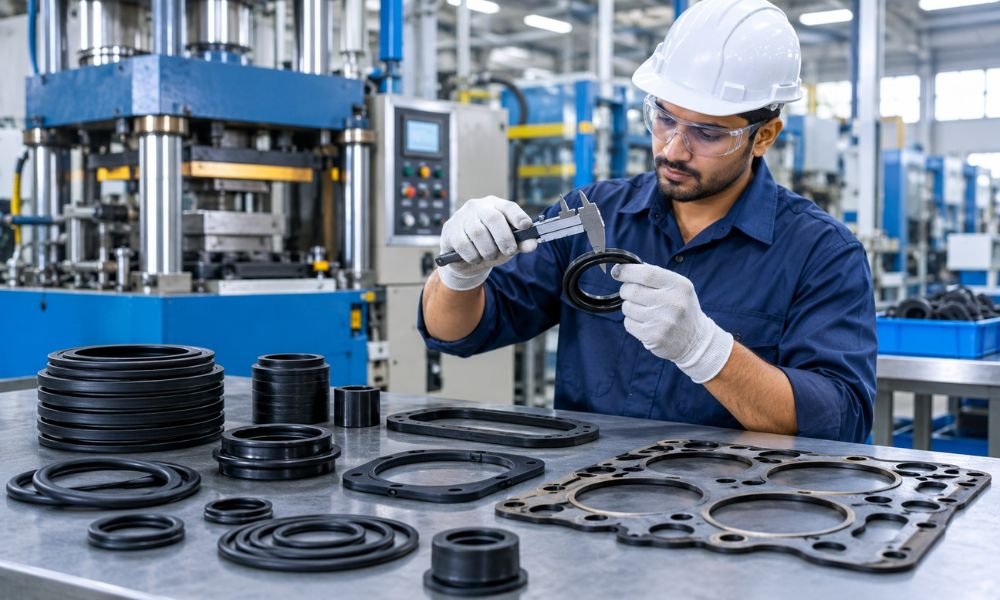
Manufacturing quality plays a significant role in the performance of industrial rubber gaskets. Even a small difference in dimensions, thickness, or material consistency can affect how properly a gasket fits and seals.
Look for manufacturers that follow organised quality control procedures during different stages of production. These may include raw material inspection, dimensional verification, hardness testing, visual inspection, and other application-specific tests.
You can also ask about the manufacturer’s quality management practices and relevant industry certifications. For example, ISO 9001 certification indicates that an organisation has an established quality management system.
Consistent manufacturing quality becomes especially important when purchasing gaskets in bulk or using them in equipment where reliable sealing is essential.
4. Look for Custom Rubber Gasket Manufacturing
Standard gasket sizes may not always match the requirements of specialised machinery and industrial equipment. Some applications need specific shapes, thicknesses, dimensions, or profiles to achieve an accurate fit.
This is why custom manufacturing capabilities should be considered when choosing a rubber gasket manufacturer.
Custom rubber gaskets can be produced according to technical drawings, measurements, samples, and application requirements. Depending on the manufacturer’s capabilities, different cutting, moulding, and fabrication methods may be available.
Before placing an order, share your specifications and confirm whether the manufacturer can produce the required design. Proper customisation helps minimise fitting problems and supports better sealing performance.
5. Understand the Manufacturer’s Product Range
A manufacturer offering different types of rubber gaskets can be useful for businesses with varied industrial requirements. Instead of contacting multiple suppliers for different sealing components, you may be able to source several products from one manufacturer.
Common rubber gasket products include rubber sheet gaskets, flange gaskets, rubber washers, O-rings, moulded rubber gaskets, and customised sealing components.
Each product serves a different purpose depending on the equipment, surface design, and operating conditions. For example, flange gaskets are commonly used between flanged connections, while O-rings are used in applications requiring a compact sealing arrangement.
Check whether the manufacturer’s product range matches your current and future requirements. However, remember that product variety should always be supported by consistent manufacturing quality.
6. Check Temperature and Pressure Resistance
Temperature and pressure conditions have a direct impact on gasket performance. A rubber material that works effectively in one environment may not be suitable for another.
Some industrial applications involve high temperatures, while others operate under varying pressure levels or experience repeated temperature changes. These conditions can affect rubber flexibility, compression, and overall durability.
Before selecting a gasket, consider the normal operating temperature, maximum pressure, exposure to chemicals, and type of fluid or gas involved.
Discuss these details with the manufacturer so that the appropriate material and gasket specifications can be recommended. Proper material selection helps reduce the risk of deformation, hardening, cracking, and leakage during operation.
7. Compare Product Pricing and Overall Value
Pricing is another important consideration when choosing a rubber gasket manufacturer in India. The cost of a gasket can vary depending on the rubber material, dimensions, thickness, manufacturing method, design complexity, and order quantity.
Although a lower quotation may seem attractive, it should not be the only deciding factor. A low-cost product made with unsuitable materials may wear out quickly and require frequent replacement.
Instead of comparing prices alone, evaluate the specifications and quality offered by different manufacturers. Ask for detailed quotations that clearly mention material type, dimensions, quantity, and other relevant requirements.
Considering the overall value rather than just the initial purchase price can help businesses manage maintenance costs and make better purchasing decisions.
8. Consider Production Capacity and Delivery Timelines
Timely product delivery is important for businesses that depend on rubber gaskets for regular manufacturing and maintenance activities. Delayed supplies can affect production schedules, equipment repairs, and project completion.
Before finalising a manufacturer, understand its production capacity and ability to manage your required order quantity. If you need customised products, ask about the expected manufacturing timeline as well.
Businesses purchasing gaskets regularly should also discuss bulk order requirements and the possibility of long-term supply arrangements.
A manufacturer with organised production planning and proper order management can make the procurement process more convenient and predictable.
9. Evaluate Technical Support and Customer Service
Technical support is particularly valuable when you are unsure about the correct gasket material, design, or dimensions. A dependable manufacturer should be willing to understand your requirements and provide relevant product information.
For example, if you are selecting a gasket for equipment exposed to oil, moisture, or temperature variations, the manufacturer should help you understand which material properties are important for that application.
Clear communication also helps avoid misunderstandings related to product specifications, order quantities, and delivery schedules.
Pay attention to how the company responds to enquiries, explains its products, and handles customer concerns. Good communication can make a significant difference when building a long-term business relationship.
10. Research the Manufacturer’s Market Reputation
Before placing a large order, take some time to research the manufacturer’s reputation. Customer feedback, business references, product information, and previous industry experience can help you understand its approach to quality and service.
You can also ask for product samples when possible, especially if you are considering a new supplier. Checking the sample against your required specifications can provide a better understanding of the product’s finish, dimensions, and material quality.
Look for a manufacturer that provides transparent product information and communicates clearly about its manufacturing capabilities. A professional approach and consistent product quality are important when selecting a supplier for ongoing industrial requirements.
Why Choosing the Right Rubber Gasket Manufacturer Matters
The right manufacturing partner can contribute to the smooth functioning of industrial equipment by providing sealing components that match specific application requirements. Properly selected rubber gaskets help minimise leakage, support equipment efficiency, and reduce the chances of unexpected maintenance.
For businesses, working with a dependable manufacturer also makes it easier to manage customised orders, maintain product consistency, and plan future requirements.
Celofin Gasket is a name to consider when exploring rubber gasket solutions for industrial applications. Before making a purchasing decision, businesses should discuss their technical specifications and evaluate whether the available products meet their particular sealing requirements.
Conclusion
Choosing a suitable rubber gasket manufacturer involves more than comparing prices or checking product availability. Material selection, manufacturing experience, quality control, customisation facilities, technical support, and timely delivery all contribute to finding the right manufacturing partner.
Take time to understand your application requirements and compare manufacturers based on their ability to deliver suitable and consistent products. Whether you require standard rubber gaskets or customised industrial sealing components, making an informed decision can help improve equipment performance and reduce long-term maintenance concerns.
By considering these factors, businesses can make better sourcing decisions and establish reliable manufacturing partnerships for their industrial sealing needs.
Don’t miss: Factors to Consider When Choosing a Gasket Dealer in India