Gaskets are essential components in automotive engines, industrial machinery, pumps, pipelines, and many other applications where a secure seal is required. They help prevent leaks, maintain pressure, and protect connected components from damage. Although gaskets may appear to be small parts, choosing the wrong product can lead to equipment problems, repeated repairs, and unnecessary expenses.
For automotive workshops, spare parts distributors, and industrial businesses, finding a suitable gasket supplier is an important purchasing decision. The right dealer should offer products that match your requirements, provide clear specifications, and maintain reliable communication throughout the ordering process.
With different materials, designs, and applications available, buyers should evaluate several factors before making a final decision. Here are the key points to consider when choosing a gasket dealer in india for your business.
1. Check the Range of Gaskets Available
Different industries require different types of gaskets. An automotive engine may need specific sealing components, while industrial equipment may require gaskets designed for particular temperatures, pressures, or chemical environments.
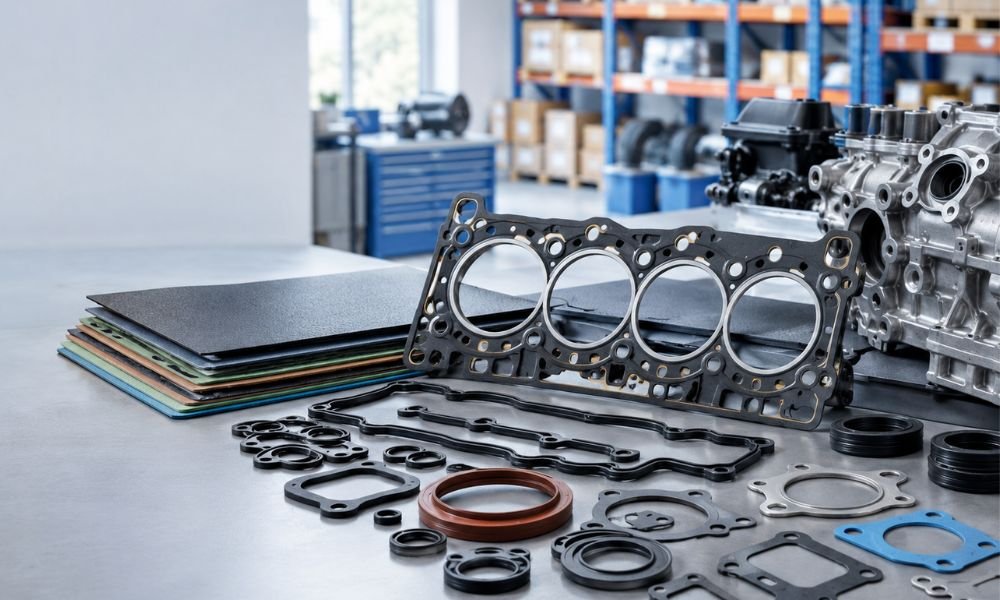
Before selecting a dealer, review the available product range. Depending on your requirements, you may need rubber gaskets, engine gaskets, cylinder head gaskets, flange gaskets, or other specialised sealing products.
A dealer with a suitable product range can make purchasing more convenient, especially if your business regularly needs different types of components. However, a large catalogue alone does not guarantee that the products will meet your requirements.
Ask for product details and confirm whether the available options are suitable for your equipment. This will help you narrow down your choices and avoid ordering components that do not match your application.
2. Evaluate Material Quality
Material selection has a direct effect on a gasket’s performance and service life. Depending on the application, a gasket may need to withstand heat, pressure, vibration, moisture, oils, or chemicals.
Common materials include nitrile rubber, EPDM, silicone, metal, and various composite materials. Each has different properties and is designed for particular working conditions.
For example, nitrile rubber is frequently used in applications involving oils and fuels, while EPDM is suitable for many outdoor and water-related environments. Metal and composite gaskets may be used in applications with specific mechanical and temperature requirements.
Before placing an order, explain how and where the gasket will be used. Ask the dealer about the material specifications and whether the selected product meets the equipment manufacturer’s requirements.
Choosing an appropriate material can help prevent premature wear, deformation, and sealing problems.
3. Confirm Dimensions and Product Compatibility
A gasket must fit correctly to create an effective seal. Incorrect thickness, diameter, opening positions, or shape can lead to installation difficulties and leakage.
This is particularly important when purchasing replacement components for engines, pumps, and industrial machinery. Products that look similar may have different dimensions or designs.
To avoid mistakes, provide the equipment model, part number, technical drawing, or accurate measurements when enquiring about a product. If you are replacing an existing gasket, verify the replacement against the required specifications instead of relying only on visual appearance.
For custom-made products, confirm every important measurement before production begins.
A dealer who carefully checks these details can help reduce incorrect orders and save time during installation or repair work.
4. Compare Prices and Overall Value
Price is an important consideration for businesses purchasing gaskets in small or large quantities. However, selecting a supplier solely because it offers the lowest quotation may not always be the best decision.
A gasket that does not meet the required specifications may need early replacement or cause additional maintenance work. These expenses can outweigh the initial savings.
When comparing quotations, consider material quality, dimensions, product type, order quantity, packaging, transportation, and any customisation charges. Make sure each supplier is quoting for products with equivalent specifications.
If you regularly purchase gaskets, ask about bulk pricing and repeat-order arrangements. A clear quotation helps you understand the actual cost and plan your purchasing budget.
The aim should be to find a product that offers suitable performance at a reasonable price rather than choosing the cheapest available option without checking its quality.
5. Check Stock Availability and Delivery Schedules
Timely delivery matters when your business depends on a regular supply of sealing components. A workshop may be unable to complete a repair without the correct gasket, while a spare parts distributor may lose sales if popular products remain unavailable.
Before finalising a dealer, confirm whether the required products are in stock or need to be sourced separately. Ask about dispatch times, estimated delivery dates, minimum order quantities, and availability for repeat purchases.
If you require several gasket types, check whether the dealer can supply the complete range within a practical timeframe.
It is also useful to understand how the supplier handles unexpected delays or out-of-stock items. Clear communication allows you to plan inventory, inform customers, and avoid unnecessary disruption to your operations.
6. Review Quality Control and Product Documentation
Quality checks help determine whether a gasket meets the required specifications. Depending on its intended application, relevant checks may include dimensional inspection, material verification, thickness measurement, or other product-specific tests.
Ask the dealer what information is available about the products you intend to purchase. This may include technical datasheets, material details, inspection reports, or applicable quality certificates.
If your business supplies components to customers with specific technical requirements, confirm the necessary documentation before placing an order.
You can also ask whether samples are available for evaluation, particularly when purchasing a new product or placing a large order.
Keep in mind that testing and certification requirements vary by application. The important thing is to verify the information relevant to your equipment rather than assuming that every gasket requires the same standards.
7. Consider Customisation Options
Standard gaskets are suitable for many applications, but certain equipment requires specialised dimensions, shapes, thicknesses, or material properties.
If your business needs non-standard components, ask whether the dealer can arrange customised products using technical drawings, physical samples, or detailed specifications.
Before approving a custom order, discuss the manufacturing process, production time, minimum quantity, and sample approval requirements. Make sure all dimensions and material details are confirmed in writing.
Clear communication is particularly important for customised gaskets because even a small error can make the finished component unsuitable.
If your requirements change frequently, look for a supplier that can coordinate technical details efficiently and explain which options are available for your application.
8. Assess Customer Support and Communication
A dependable gasket dealer should provide clear information before, during, and after a purchase. Buyers may need assistance identifying the correct component, checking availability, requesting quotations, or resolving delivery issues.
Pay attention to how the supplier responds to your questions. Product specifications should be explained clearly, and delivery commitments should be realistic.
It is also worth asking about the procedure for handling incorrect, damaged, or defective products. Understanding the replacement process beforehand can help prevent disagreements later.
Customer reviews and business references may offer additional insight into service quality. However, they should be considered alongside technical suitability, product documentation, and the dealer’s ability to fulfil orders.
Good communication makes repeat purchasing easier and helps establish a more dependable business relationship.
Look for Long-Term Supply Reliability
For businesses that use gaskets regularly, a supplier should be able to support ongoing requirements rather than simply fulfil one order.
Consider whether the dealer can manage your expected purchase quantities, provide access to frequently required products, and maintain consistent specifications across repeat orders.
Discuss minimum order quantities, payment terms, stock planning, and delivery arrangements before establishing a regular purchasing relationship.
Keeping records of previous orders, part numbers, and material specifications can also make future purchases easier. These details help your team identify the correct products without repeating the entire selection process each time.
A dependable supply arrangement can improve inventory planning, reduce purchasing delays, and help your business manage operating costs more effectively.
Conclusion
Choosing a suitable gasket dealer involves more than comparing prices. Product variety, material quality, accurate dimensions, quality control, delivery schedules, and customer support all contribute to a successful purchasing decision.
Before selecting a supplier, identify your application requirements, verify product specifications, and compare quotations on an equal basis. For specialised or bulk orders, request relevant documentation and confirm availability before committing to the purchase.
Celofin Gasket can be considered when evaluating gasket solutions for automotive and industrial applications. Before making a final decision, confirm that the available products and supply arrangements match your technical requirements.
Taking the time to assess these factors can help your business avoid common purchasing mistakes, maintain product consistency, and build a more reliable supply process for the future.
Don’t miss: Engine Gasket Set Manufacturers in Delhi, India: What Buyers Should Know